Matcha, sencha, hōjicha.
Getting to know Japanese tea.
Japanese tea takes many forms, shaped by how leaves are grown, processed and prepared. Start with three varieties often encountered in daily life: matcha, sencha and hōjicha.
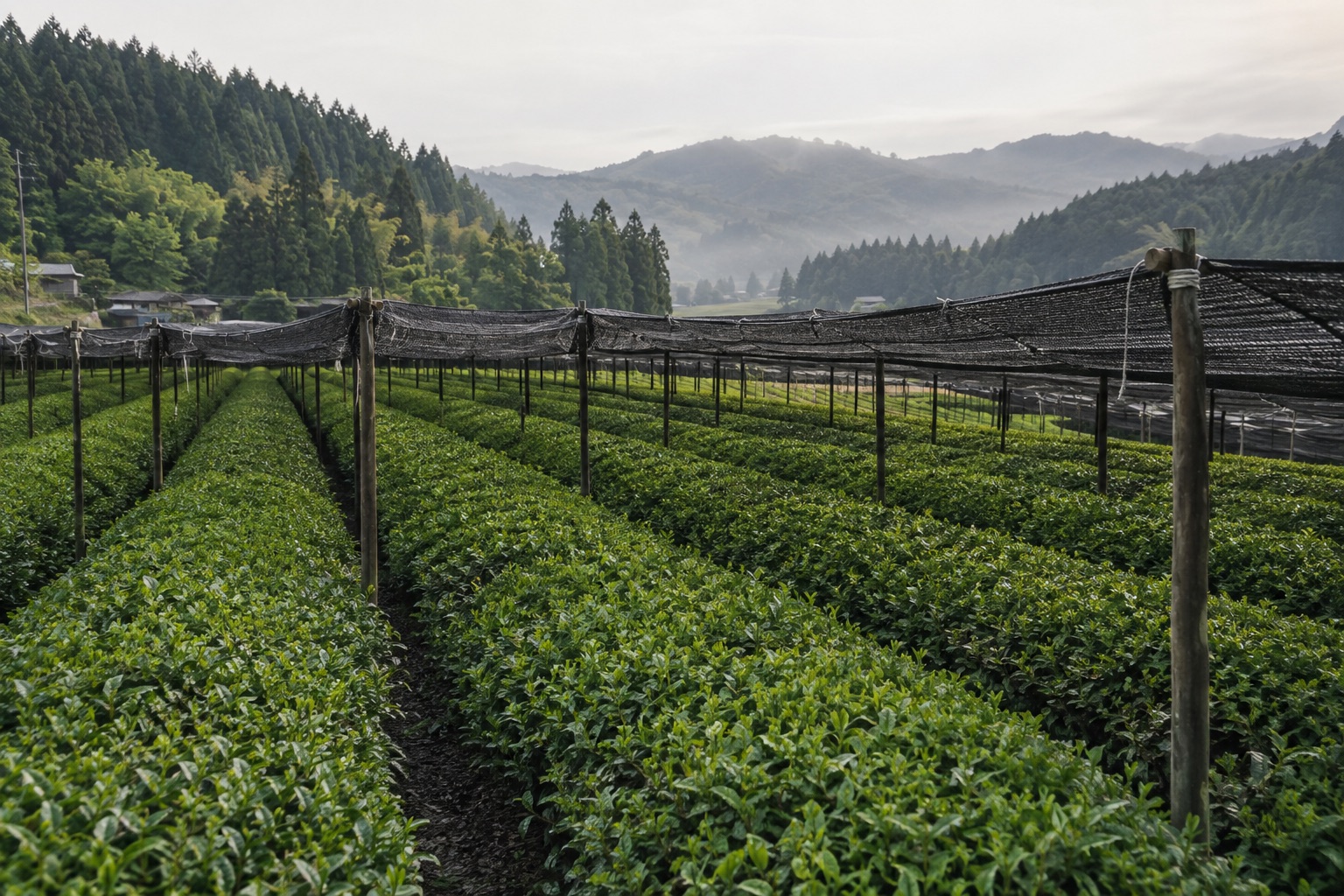
Matcha is finely ground tencha
Matcha is made by finely grinding tencha: leaves that are shade-grown, steamed and dried. It is mixed with water and enjoyed with the powdered leaf, giving it a preparation and texture distinct from sencha.
Sencha is brewed leaf tea
Sencha is green tea made by steaming, rolling and drying tea leaves. It is brewed with water, often in a teapot, to enjoy the flavour drawn from the leaves. Water temperature and brewing time affect the result.
Hōjicha is valued for its roasted aroma
Hōjicha is tea made by roasting leaves. Its toasty aroma is a defining feature, and it can be enjoyed hot or cold. Flavour varies with the starting material and the roasting approach.
Choose by preparation and aroma
Choose matcha for the time of whisking a bowl, sencha for brewing leaves, or hōjicha when you want a roasted aroma. Start with small amounts and use product guidance alongside your own preferences.