Drinking matcha or culinary matcha.
Choose by how you will use it.
The terms “ceremonial grade” and “culinary grade,” often used outside Japan, are not universal official grading standards. Do not decide by the label alone: consider how you will use the matcha and what the product description actually says.
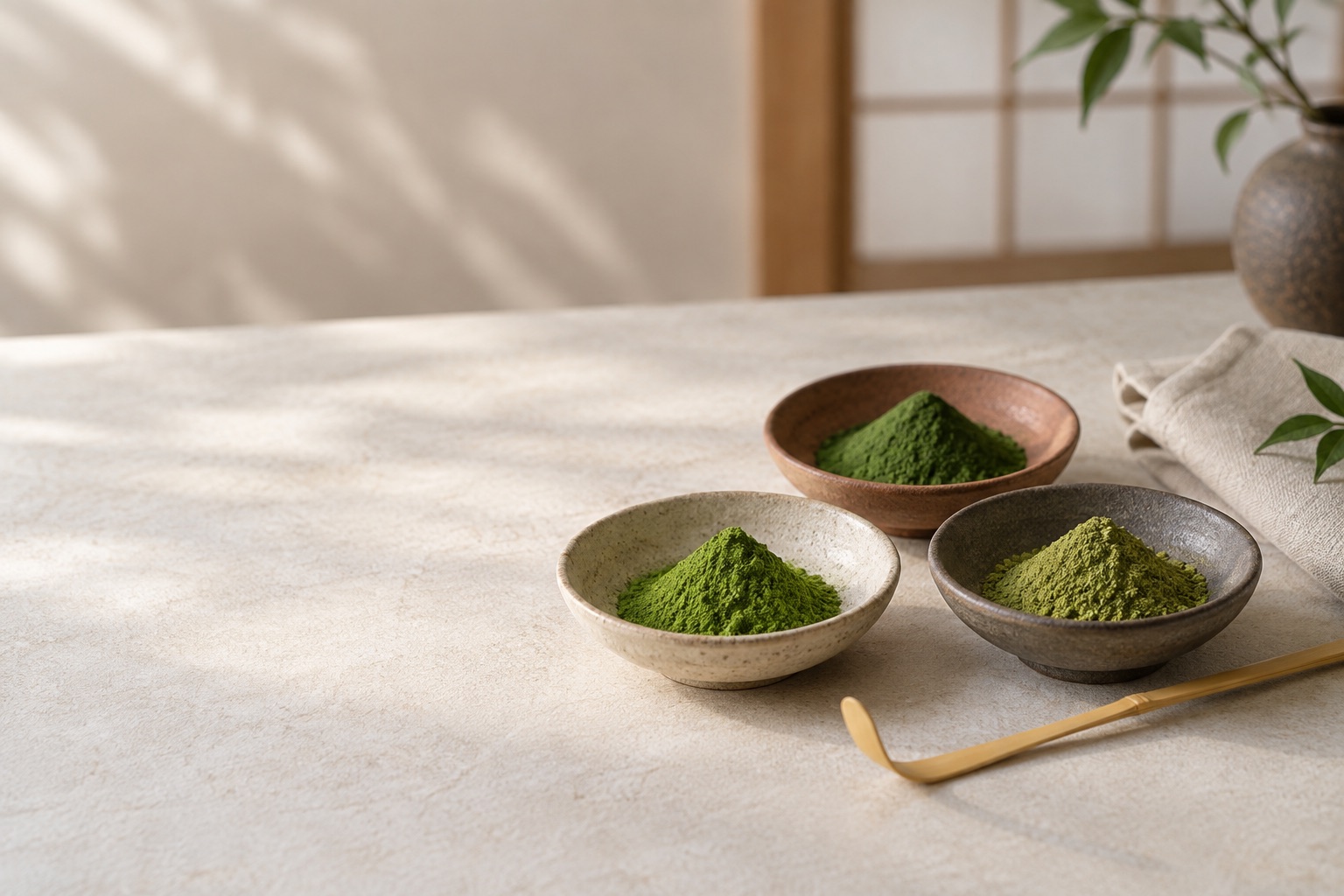
Decide how you will use it
For whisking with water and enjoying aroma and umami directly, matcha described for drinking can be a useful starting point. For lattes, smoothies, baking or cooking, look also for guidance about pairing with milk or food.
Read product information beyond a grade name
Labels such as “ceremonial” and “culinary” do not set one uniform flavour or quality. Check ingredients, origin, producer, intended use, flavour notes and storage information, and compare the seller’s guidance.
Imagine the flavour in context
For thin tea or a simple latte, balance among aroma, umami, bitterness and astringency can shape drinkability. In baking and cooking, consider flavour alongside sugar, dairy, fats and other ingredients.
Try a small amount in practice
Start with a small amount of an unfamiliar matcha. Compare how it feels whisked, combined with milk or used in food. A product’s fit becomes clearer through both its description and your own tasting.